Emotion Identification Guide for Naming Feelings and Building EQ
Emotion identification is the practice of noticing, naming, and understanding what you feel before you decide what to do with it. That sounds simple, but many people only have broad labels such as "fine," "stressed," or "upset" available in the moment. A richer emotional vocabulary can make self-awareness, communication, and regulation feel more workable. This guide explains what emotion identification means and how worksheets, charts, wheels, cards, and everyday activities can help. If you want a broader EQ context, you can also use an emotional intelligence self-reflection tool as a gentle starting point.

What Emotion Identification Means
Emotion identification means accurately recognizing and labeling an emotional state. It includes more than choosing a word from a list. A useful label connects three pieces of information: the feeling word, the body signal, and the context. For example, "I am anxious" becomes more useful when it becomes "I feel anxious, my chest is tight, and it started after I read that message."
This matters because emotions often arrive before language. You may notice a faster heartbeat, a sudden urge to withdraw, or a sharp tone before you know whether the emotion is embarrassment, anger, fear, disappointment, or overload. Naming the feeling creates a small pause. That pause can support self-awareness and make the next response less automatic.
In emotional intelligence, emotion identification sits close to self-awareness. It helps you notice your own patterns, understand what another person might be feeling, and choose a response that fits the situation. It is not about judging emotions as good or bad. It is about making them specific enough to work with.
Why Naming Feelings Supports Regulation
Emotion regulation does not always begin with calming down. Often, it begins with knowing what is happening. If you call every uncomfortable feeling "stress," your next step may be too vague. Stress after a deadline, sadness after a loss, resentment after an unfair task, and shame after a mistake may all need different care.
Naming an emotion can also reduce confusion between the feeling and the action impulse. Anger may come with an urge to argue, but the feeling is not the same as the behavior. Fear may come with an urge to avoid, but it may be pointing to uncertainty, lack of information, or a need for support.
For many people, the goal is not to remove the emotion. A better goal is to notice it early, understand what it may be signaling, and choose a response that fits your values. That is why emotion identification activities are useful in everyday EQ practice: they turn a hidden internal signal into something you can reflect on, discuss, and practice.
Use an Emotion Identification Chart, Wheel, or Worksheet
Tools can help when your mind goes blank. An emotion identification chart gives you a visible list of feeling words. An emotion identification wheel starts with broad emotion families, then expands into more specific labels. An emotion identification worksheet adds prompts so you can connect the label to a trigger, body cue, thought, need, or next step.
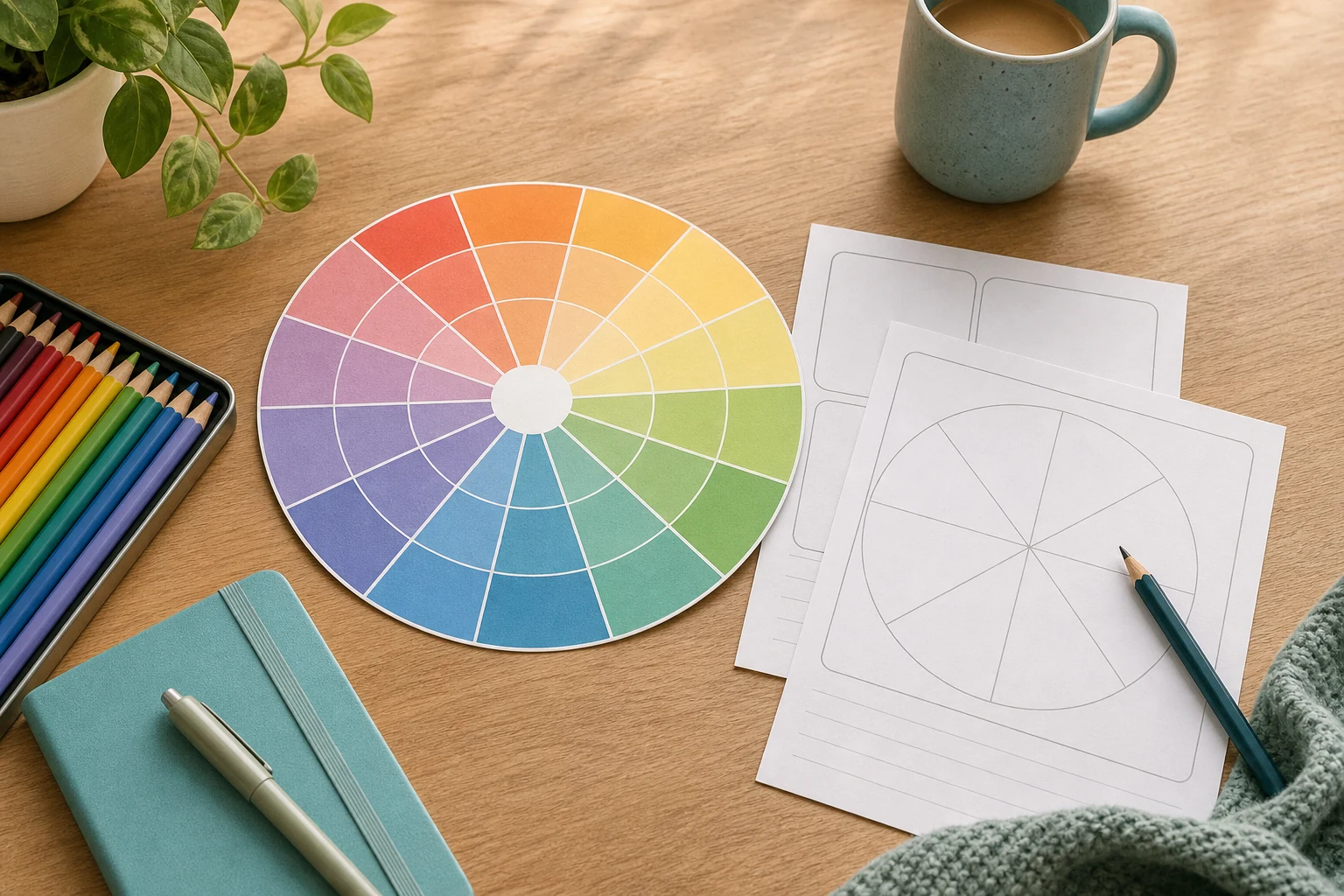
A simple worksheet can use five prompts:
- What happened just before I noticed the feeling?
- What body signals do I notice?
- Which broad emotion family fits best: anger, fear, sadness, joy, disgust, surprise, calm, or another state?
- Which more specific word fits better?
- What need, boundary, or action might this emotion be pointing toward?
The wheel is especially helpful when your first answer is broad. You may begin with "angry" and then find "irritated," "dismissed," "pressured," or "protective." You may begin with "sad" and then find "lonely," "discouraged," "grieving," or "disappointed." More precise language often makes communication less blaming. "I felt dismissed in that meeting" gives another person more usable information than "You made me mad."
When using any chart or worksheet, keep the tone exploratory. A feeling word is a hypothesis, not a verdict. You can revise it as more information appears.
Emotion Identification Activities for Adults
Adults often need emotion identification activities that fit into real life rather than feeling like homework. The following practices are short enough to use between meetings, after a conflict, or at the end of the day.
Try a 90-second body scan. Pause and notice your jaw, shoulders, chest, stomach, hands, and breathing. Write down three neutral observations before choosing an emotion label. This keeps you from jumping straight to a story.
Use a two-column journal. On the left, write the situation in plain facts. On the right, write feeling words and body cues. Separating facts from interpretations can help you see whether the emotion is connected to the event, a remembered pattern, or an unmet need.
Practice intensity ratings. Choose a feeling word, then rate it from 1 to 10. "Frustrated at a 3" may call for patience. "Furious at an 8" may call for space before a conversation. Intensity helps you pick a proportionate response.
Reflect after communication. After a difficult conversation, ask: What did I feel before, during, and after? What did the other person seem to feel? What did I say clearly, and what did I leave hidden? This connects emotion identification to empathy and social awareness.
For readers building broader self-awareness, an EQ growth check-in can pair well with these practices because it frames feelings as part of communication, motivation, empathy, and self-regulation rather than as isolated moods.
Emotion Identification Activities for Teens and Kids
Emotion identification for kids and teens works best when it is concrete, visual, and non-shaming. Younger children may need cards, pictures, stories, or games before they can describe inner states. Teens may prefer privacy, choice, and language that does not feel childish.
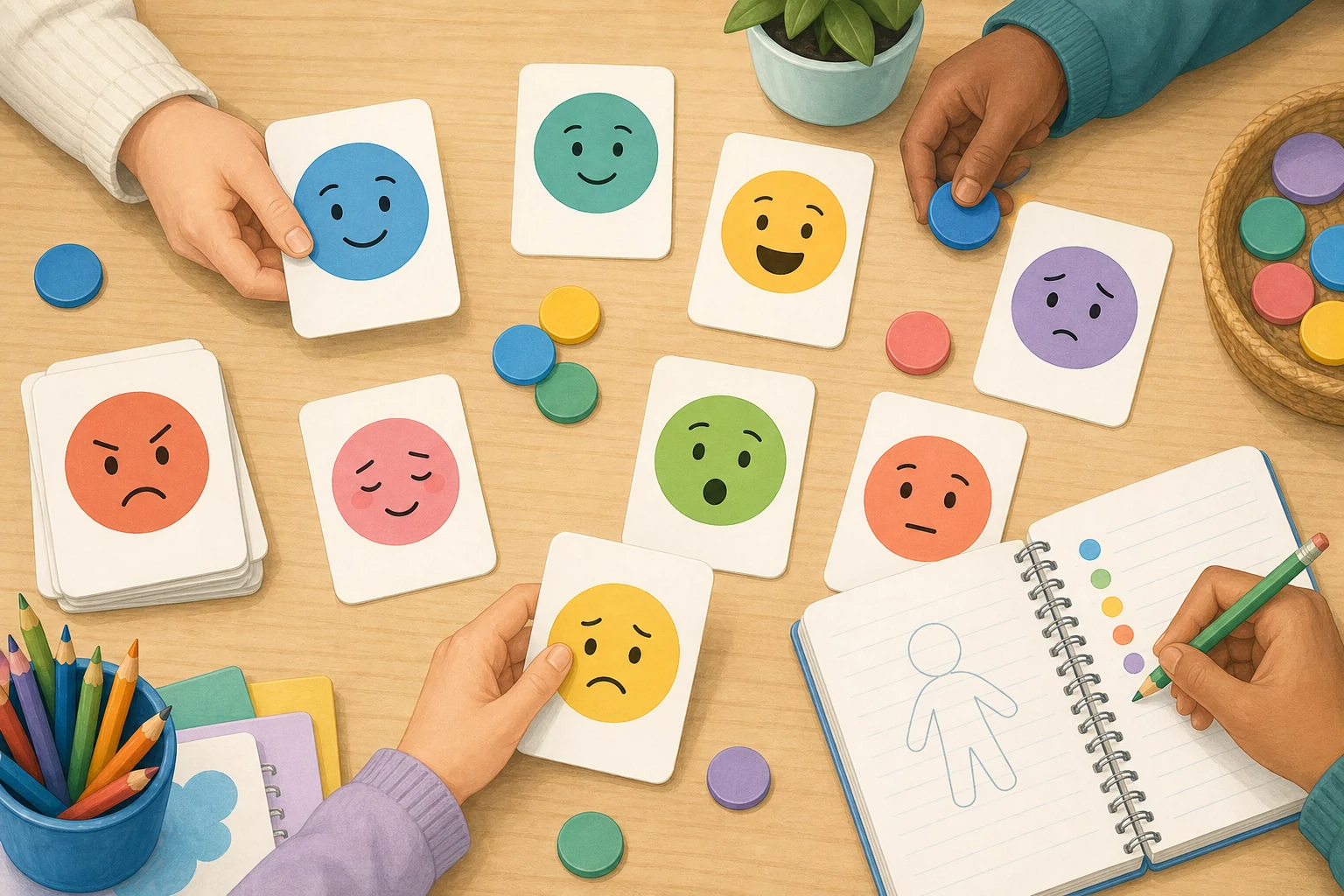
For kids, emotion identification cards can turn naming feelings into a matching activity. A child can pick a card for a story character, a face in a picture, or their own current state. The adult can ask, "What tells you that?" rather than "Are you sure?"
For teens, try a low-friction check-in scale: energy high or low, feeling pleasant or unpleasant, urge to move toward or away. That can be easier than choosing from a long list. Once the teen has a quadrant, offer a few possible words and let them choose, reject, or add their own.
Emotion identification games can also help groups. One person describes a situation without naming the feeling, and others guess possible emotions with evidence. Another option is a "same situation, different feeling" game: one student might feel excited about a class presentation, another might feel exposed, and another might feel proud. The lesson is that emotions are shaped by context, history, thoughts, and needs.
How to Build an Emotion Identification Routine
A routine should be simple enough to repeat. Start with one daily moment: after waking, after school or work, before sleep, or after a strong reaction. Use the same four steps for two weeks.
First, notice the signal. This might be a body cue, a behavior cue, or a thought cue. Examples include tight shoulders, snapping at someone, scrolling to avoid a task, or repeating the same worry.
Second, choose a broad emotion family. Do not force precision too early. If the best you can do is "unpleasant and high energy," that is still useful.
Third, narrow the word. Use a chart, wheel, worksheet, or card deck. Ask whether the word fits the body cue and context. If several words fit, write down two or three.
Fourth, ask what the feeling needs. It may need expression, rest, movement, information, a boundary, repair, or support. This step connects identification with regulation strategies such as pausing, reframing, problem-solving, asking for help, or practicing acceptance.
Keep the routine compassionate. If you struggle to identify emotions, that does not mean you lack emotional intelligence. It means the skill may need more practice, better tools, or a safer context.
Common Mistakes When Identifying Emotions
One common mistake is stopping at the first label. "Angry" may be true, but it may also be covering hurt, fear, embarrassment, or exhaustion. The first word opens the door; it does not have to be the final answer.
Another mistake is treating emotions as proof. A feeling is real as an experience, but it may not fully describe the situation. Feeling rejected does not always mean someone intended rejection. Feeling guilty does not always mean you did something wrong. Good emotion identification leaves room for both inner truth and outside facts.
A third mistake is using tools mechanically. An emotion identification worksheet is only helpful if it supports reflection. If it becomes a way to criticize yourself for not being clear enough, simplify it. Use fewer words, fewer prompts, or a visual scale.
Finally, people sometimes skip other people's emotions. Emotional intelligence includes noticing your own state and staying curious about others. In conversations, try pairing self-identification with perspective-taking: "I felt defensive when I heard that feedback, and I wonder if you felt unheard when I responded quickly."
Put Emotion Identification Into Everyday EQ Practice
Emotion identification becomes most useful when it moves from a worksheet into real moments. Before a difficult conversation, name what you feel and what you want to protect. During a tense exchange, notice whether your emotion is rising, narrowing your attention, or pushing you toward a reaction. Afterward, reflect on what you learned about your triggers and needs.

This is also where emotion identification connects to emotional intelligence skills such as self-awareness, self-regulation, empathy, motivation, and social skills. When you can name what is happening inside, you can communicate more clearly and notice patterns earlier.
If you want a low-pressure next step, explore an emotional intelligence reflection resource and compare what you learn with a week of emotion notes. Treat any result as educational information, not a clinical judgment. For ongoing distress, safety concerns, or emotions that feel unmanageable, consider support from a qualified professional.
FAQ
What is emotion identification?
Emotion identification is the process of noticing, naming, and understanding an emotional state. It often includes a feeling word, body cues, the situation that triggered the feeling, and the need or action the feeling may be pointing toward.
Is emotional identification the same as emotion regulation?
No. Emotional identification is one part of emotion regulation. Identification helps you understand what is happening. Regulation is the broader process of responding to emotions in a way that is workable, proportionate, and aligned with your values.
What does it mean to be dysregulated?
Being dysregulated usually means your emotional, physical, or behavioral response feels harder to manage than usual. You might feel flooded, shut down, impulsive, numb, or unable to think clearly. If this happens often or feels unsafe, professional support can be helpful.
What are the five emotion regulation strategies?
Common strategies include noticing and naming the feeling, pausing before acting, changing the situation when possible, shifting attention, reframing thoughts, accepting what cannot be changed right now, and using support. Different frameworks group these strategies in different ways.
What are the 4 types of emotional intelligence?
One common way to describe emotional intelligence includes self-awareness, self-management, social awareness, and relationship management. Some models use five domains, adding motivation or separating empathy and social skills. The shared idea is that EQ connects inner awareness with effective interaction.
What is the best emotion identification worksheet?
The best worksheet is the one you will actually use. Look for prompts that ask what happened, what you felt in your body, which emotion words fit, what need may be present, and what next step would be helpful. For kids or teens, visual cards or a simple chart may work better than a long worksheet.
Can emotion identification help kids and teens?
Yes, when it is age-appropriate and low-pressure. Kids often benefit from pictures, stories, games, and cards. Teens may prefer private journaling, music-based reflection, energy scales, or brief check-ins that respect their autonomy.