Emotional Agility Guide: Master Adaptive EQ Skills with Your Emotional Intelligence Test
In our fast-paced world, understanding your feelings is only the first step. True success comes from how you use that knowledge. Have you ever felt perfectly calm at work but found yourself easily frustrated at home? Or perhaps you lead your team with confidence but feel anxious in new social settings?
Why is it so hard to stay emotionally balanced in different situations? The answer lies in emotional agility. This is the ability to adapt your emotional intelligence (EQ) to fit the specific needs of any moment. It is not about having a high score once. It is about how you move through life's diverse challenges.
To begin this journey, you need a clear starting point. You can take a test to see where your current strengths lie. This guide will help you turn those results into a practical plan for building adaptable emotional intelligence. You’ll learn how to navigate high-pressure meetings and quiet family dinners with equal ease.
Understanding Emotional Agility and Its Components
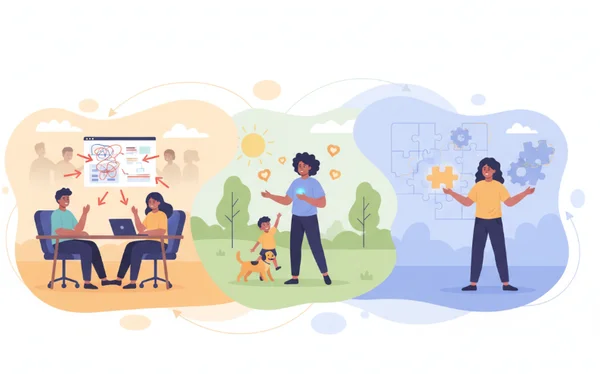
Emotional agility is the bridge between knowing your emotions and acting on them effectively. While standard emotional intelligence gives you the tools, agility provides the skill to use the right tool at the right time. It is the difference between knowing how to hammer a nail and knowing when a screwdriver is actually required.
What Makes Emotional Intelligence Adaptable?
Adaptability in EQ means you do not react the same way to every stressor. An adaptable person reads the room and adjusts their behavior. If a colleague is upset, you offer empathy. If a project is failing, you switch to a logical, problem-solving mode.
Being adaptable requires you to stay present. Instead of relying on old habits, look at the current situation clearly. This prevents "emotional stuckness," where you repeat the same mistakes. When you develop contextual EQ skills, you stop being a victim of your moods. You become the pilot of your reactions.
Adapting Goleman’s 5 EQ Components to Different Contexts
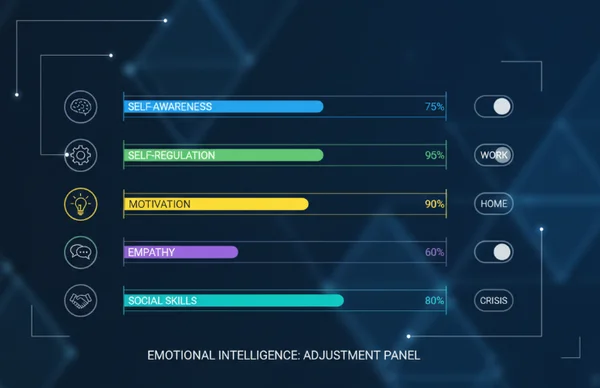
To master agility, we must look at the five core pillars of emotional intelligence defined by Daniel Goleman. Each one plays a different role depending on your environment:
- Self-Awareness: Recognizing your mood in the office versus with friends.
- Self-Regulation: Staying calm during a crisis but allowing yourself to feel joy during a celebration.
- Motivation: Using internal drive for solo tasks while using external encouragement to help a team.
- Empathy: Feeling what a client needs during a sale and what a child needs during a tantrum.
- Social Skills: Leading a formal presentation or listening deeply in a private conversation.
Each of these components must be flexible. To see how you currently rank in these areas, you can start your test on our homepage.
Why Traditional EQ Strategies Fall Short in Dynamic Environments
Many people treat EQ as a static trait. They think, "I am an empathetic person," and use empathy in every situation. However, extreme empathy during a cold-hearted business negotiation might lead to a poor outcome. Similarly, being purely logical in a romantic relationship can cause distance.
Traditional strategies often focus on "improving your score" rather than improving your flexibility. Life is not one-size-fits-all. This is why a modern EQ flexibility guide focuses on transitions. These are the moments when you move from one role to another.
Using Your EQ Test Results as a Flexibility Foundation
Before you can adapt, you must know your starting point. Data is the best foundation for growth. By using a scientific approach, you can see the "shape" of your personality and where you might hit a wall.
Interpreting Your EQ Profile for Contextual Strengths
When you receive your results from an online EQ test, look beyond the final number. Analyze the breakdown of your skills. You'll identify where you have high self-regulation but perhaps lower social skills.
If your strength is staying calm, use it in high-stress work environments. However, you’ll also spot if this same calmness makes you appear cold in social settings. Recognizing this allows you to intentionally dial up your warmth when the context changes.
Identifying Your Emotional Adaptation Gaps
A gap occurs when your natural emotional style does not match the demands of your environment. For example, a self-improver like Alex might be great at self-motivation. If his new job requires leading a team, his gap might be Social Awareness.
Identifying these gaps is not a sign of failure; it is a roadmap for development. Once you know where you struggle to adapt, you can practice specific behaviors to bridge those gaps. The goal is to have a full range of emotional responses available.
Creating Your Personal EQ Flexibility Dashboard
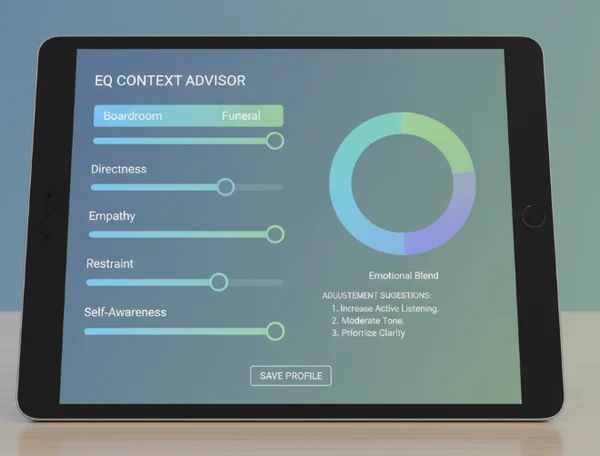
Imagine a dashboard with various sliders. One slider is for Directness, another for Empathy, and another for Restraint. Depending on where you are, you move these sliders.
- In a Boardroom: Slide Directness up and Soft Empathy down.
- At a Funeral: Slide Empathy up and Directness down.
- During a Workout: Slide Internal Motivation to the maximum.
To build this dashboard, you first need to know where your sliders are naturally set. You can see your results by taking our 20-question assessment today.
Building Adaptive Emotional Intelligence in Real-World Contexts
Theory is good, but practice is better. Let’s look at how building emotional agility looks in your daily life. Most people struggle during transitions—the moments between being a professional, a parent, and a friend.
Workplace Adaptation: Switching Between Leadership and Collaboration Modes
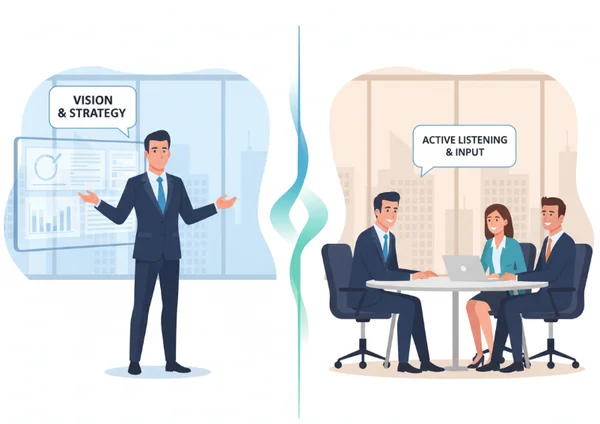
High-achievers often overuse "Leadership Mode," issuing orders when listening is crucial. Adapt by switching roles fluidly. Leading a project? Prioritize clarity and motivation. Collaborating? Shift to empathy and active listening.
Boss mode stifles creativity in brainstorming. Practice switching roles to elevate your impact. Colleagues will see you as both decisive and approachable. For those leading larger groups, you can assess your team's EQ adaptability to ensure the whole department stays flexible.
Consider Sarah, an HR Developer managing a corporate merger. She used our team assessment tools to help her staff navigate the transition. By analyzing her team’s results, she identified who struggled with change and who excelled at empathy. This data allowed her to assign roles based on emotional strengths, turning a stressful period into a collaborative success.
Home Life Transitions: From Professional to Parental EQ Application
Transitioning after a day of high-stakes decisions is challenging. Your family needs a warm, present version of you, not the budget-focused professional. You may still be in problem-solving mode, but your family needs connection.
To make this transition, try a buffer activity. Spend five minutes in your car or take a short walk before entering your home. Use this time to intentionally move your EQ sliders from Logical to Warm.
Crisis Response: Accessing Your Highest EQ Under Pressure
In a crisis, our brains often go into "fight or flight" mode. This shuts down our emotional intelligence. Agility allows you to stay in the Green Zone. This is the state where you feel the stress but choose your response.
When things go wrong, ask: "What does this moment need from me?" If a friend is in an emergency, they need your calmness, not your panic. Training your EQ allows you to access these higher-level functions even when your heart is racing.
Social Settings: Reading and Adapting to Emotional Environments
Social agility is the ability to match the vibe of a group. This is not about being fake; it is about being appropriate. In a celebratory setting, let your enthusiasm show. At a professional networking event, lead with curiosity and poise.
If you struggle with this, start by observing. Spend the first ten minutes of any social event listening more than talking. This helps you calibrate your internal dashboard to the room's energy. To improve this skill, you can try our tool to see how you currently handle social complexity.
Scenario-Based Exercises for EQ Adaptability Development
Like any muscle, your emotional agility grows with exercise. You don't need a classroom to practice. You just need a few minutes of focus each day.
Exercise 1: Context-Switching for Workplace Transitions
Before you enter a new environment, play a mental movie. If you are going into a difficult meeting, imagine yourself staying calm while a colleague gets angry. See yourself responding with a steady voice.
By simulating the change in context before it happens, you prime your brain to adapt. This reduces the shock to your system and helps you maintain control over your reactions.
Exercise 2: Emotional Role-Playing for Enhanced Adaptability
If you have a trusted friend or a mentor, practice difficult conversations. Ask them to play a difficult client or a disappointed employee.
Try responding to them using different EQ strategies. Notice which ones feel natural and which ones feel forced. This safe space allows you to fail and learn without real-world consequences. It is a powerful way to build contextual EQ skills.
Exercise 3: Progressive EQ Exposure Training Methods
Don't start with your biggest fear. If you find it hard to be vulnerable, don't start by sharing deep secrets at work. Instead, try sharing a small mistake you made or a minor worry.
Slowly increase the difficulty of your emotional adaptations. As you succeed in small moments, your confidence will grow. Over time, you will find that you can adapt to almost any emotional climate. To track your progress, it is helpful to check your EQ every few months.

Your Journey Toward Mastering Emotional Agility
Think of emotional agility as a skill you refine daily—like learning a language. Small, intentional adjustments add up to lifelong resilience. By understanding your core EQ components and practicing how to switch them based on your environment, you become more effective.
Remember these three takeaways:
- Awareness is the foundation: You cannot adapt what you do not measure.
- Context is king: There is no "perfect" emotional state, only the right state for the moment.
- Practice makes permanent: Use daily transitions to exercise your agility sliders.
Are you ready to see where you stand? The first step to becoming more adaptable is knowing your starting point. Use our insights to unlock a deeper understanding of your emotional world. You can start your assessment right now and begin building the life you deserve. Using an emotional intelligence test provides the baseline you need to grow.
The Takeaway
How can I measure my progress in developing emotional agility?
The best way to measure progress is through reflection and consistent testing. Keep a journal of transitions where you felt successful or where you struggled. Additionally, taking a free emotional intelligence test every three to six months provides objective data on how your skills are evolving.
How long does it take to become emotionally adaptable?
Just like fitness, EQ adaptability improves fastest with consistent practice. Many users report sharper reactions within 30 days of using our exercises. However, building deep emotional agility—where you adapt naturally—usually takes several months of intentional effort.
Can anyone develop emotional agility regardless of their current EQ level?
Yes! Emotional intelligence is a set of skills, not a fixed trait like height. Whether you start with a high or low score, you can always improve your flexibility. Our online tool helps everyone from beginners to experts find specific ways to grow and adapt to life's many challenges.