Emotional Intelligence Test: An EQ Case Study for Boosting Team Collaboration
In today's competitive landscape, the difference between a good team and a great one often comes down to a single, powerful factor: emotional intelligence. Yet, many leaders and HR professionals watch as talented teams are held back by friction, misunderstandings, and poor communication. They invest in traditional training, but the core issues persist. This eq test case study explores how one team transformed its dynamics, moving from disjointed to synergistic, by leveraging a targeted assessment. What is an emotional intelligence test, and can it truly unlock a team's full potential?
The answer lies in understanding the hidden emotional currents that dictate team behavior. By identifying these undercurrents, we can address them directly. This case study demonstrates a clear path to enhancing performance and morale, a journey you can begin with a simple yet profound emotional intelligence assessment.

The Challenge: Uncovering Team Emotional Intelligence Gaps
The team at the center of our case study, a marketing group at a mid-sized tech company, was struggling. On paper, they were stacked with talent, but their results were consistently mediocre. Projects were plagued by delays, meetings were tense, and a palpable sense of frustration filled the air. The team leader, facing pressure to improve performance, needed to understand the root cause of the dysfunction before it led to losing valuable employees.
Identifying Communication Breakdowns and Underlying Conflict
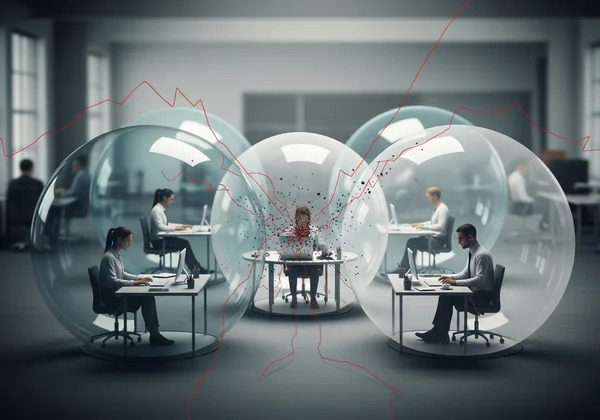
The most visible problem was a complete breakdown in communication. Feedback was either avoided entirely or delivered so poorly that it sparked resentment. Team members worked in silos, hesitant to share ideas for fear of criticism. This lack of psychological safety fostered an environment of mistrust, where minor disagreements quickly escalated into significant, unresolved conflicts. The team's creative potential was being suffocated by poor interpersonal dynamics and a lack of mutual understanding.
Why Traditional Development Programs Fell Short
The company had already invested in several generic team-building workshops and communication seminars. While these programs offered some useful tips, they failed to create lasting change. The reason was simple: they were a one-size-fits-all solution for a problem that was deeply personal and specific to the team's unique composition. The training didn't address the core emotional intelligence competencies—or lack thereof—that were driving the negative behaviors. Without a precise diagnosis of the team's emotional landscape, any intervention was merely a shot in the dark.
The Solution: Leveraging an EQ Test for Targeted Team Insight
Frustrated with the lack of progress, the team leader decided to pivot from generic training to a data-driven approach. The goal was to gain objective insights into the team's collective strengths and weaknesses in emotional intelligence. This shift in strategy was the turning point, leading them to a powerful diagnostic tool that could illuminate the path forward. By understanding the individual and group dynamics, they could finally craft a targeted development plan.
Choosing the Right Emotional Intelligence Assessment for Employees
The leader needed a tool that was accessible, insightful, and scientifically grounded without being overly complex or expensive. After researching various options, they chose the online emotional intelligence test tool. It struck the perfect balance, providing a free initial assessment that was easy for team members to complete, with the option for a deeper, AI-powered analysis. This flexibility made it an ideal emotional intelligence assessment for employees, offering valuable insights that could be immediately applied. The free online eq test provided the perfect entry point for the team.
From Raw Scores to Personalized Action Plans for Each Team Member
Completing the assessment was the first step. The real breakthrough came from the results. Instead of just a generic score, the optional AI-driven reports provided a detailed breakdown of each individual's emotional intelligence profile. The reports highlighted specific areas of strength and opportunities for growth across key competencies like self-awareness, self-regulation, empathy, and social skills.
Armed with this personalized feedback, the team leader facilitated one-on-one sessions where each member could understand their results in a supportive, non-judgmental context. This process transformed an abstract concept like "poor communication" into concrete, actionable insights. For the first time, team members could see why they reacted certain ways and how their emotional tendencies impacted others.

The Impact: Real-World Improvements in Team Collaboration
The true measure of any intervention is its real-world impact. For this team, the results were not just positive; they were transformative. Moving beyond theory, the insights from the EQ test catalyzed tangible behavioral changes that revitalized the team's culture and performance. The data provided a common language for discussing interpersonal issues, turning vague frustrations into solvable problems.
Enhanced Self-Awareness and Empathy Driving Better Interactions
The most immediate change was a dramatic increase in self-awareness. Team members began to recognize their emotional triggers and manage their reactions more effectively. This newfound self-awareness naturally led to greater empathy. Individuals started to understand their colleagues' perspectives, even during disagreements. Instead of reacting defensively, they began asking clarifying questions. This shift from assumption to inquiry rebuilt trust and made collaboration feel safe and productive again. You can discover your EQ and see how it impacts your own interactions.
Measurable Gains in Conflict Resolution and Project Efficiency
With improved communication and trust, the team's ability to handle conflict constructively skyrocketed. Disagreements were no longer seen as personal attacks but as opportunities to find better solutions. This led to a significant reduction in project delays caused by interpersonal friction. Meetings became more efficient, brainstorming sessions more creative, and overall project efficiency improved by over 20% in the following quarter. The team was finally living up to its potential, and the improved results spoke for themselves.

Beyond the Test: Fostering EQ as a Core Leadership Development Tool
The initial success of the EQ assessment evolved into a broader initiative. The leadership team recognized that emotional intelligence wasn't just a tool for crisis intervention; it was a cornerstone of effective leadership and sustainable team performance. They integrated EQ development into their ongoing talent management strategy, positioning it as a core competency for current and future leaders. This made the emotional intelligence test a key part of their growth toolkit.
Sustaining Growth with Continuous EQ Development Initiatives
To ensure the positive changes would last, the company implemented several follow-up measures. They established peer coaching groups where team members could continue discussing their EQ development goals. The leader incorporated EQ-related objectives into performance reviews, signaling its importance. The team also agreed to retake the emotional intelligence appraisal test annually to track progress and identify new areas for growth. This commitment to continuous EQ development embedded emotional intelligence into the very fabric of their team culture.
Unlock Your Team's Potential: Start Your EQ Journey Today
This case study proves that unresolved team conflicts and communication breakdowns are often symptoms of underdeveloped emotional intelligence. By moving beyond generic training and using a targeted emotional intelligence assessment, this team was able to diagnose its core challenges and implement a personalized action plan that yielded measurable results. They didn't just solve a problem; they built a more resilient, empathetic, and high-performing culture.
Your team has the same potential. Stop guessing and start understanding. The first step is to gain clarity on where you stand. Guide your team toward better collaboration, higher efficiency, and a more positive work environment. Start your free assessment today and unlock your team's true power.
Frequently Asked Questions About Team Emotional Intelligence Tests
What is an emotional intelligence test, and how does it specifically benefit a team?
An emotional intelligence test is an assessment designed to measure an individual's abilities across key areas of EQ, such as self-awareness, self-management, social awareness, and relationship management. For a team, it provides a data-driven snapshot of the group's collective strengths and weaknesses, offering a clear framework for improving communication, conflict resolution, and overall collaboration.
How does Emotionalintelligencetest.org's assessment cater to employees or leaders within a team?
Our platform is designed for both individual growth and team development. For employees, it offers confidential, personalized insights to foster self-awareness. For leaders, it serves as a powerful diagnostic and leadership development tool, providing the necessary data to facilitate targeted coaching, build stronger team cohesion, and create a more emotionally intelligent culture. You can easily have your team members take the free test.
What constitutes a "good score" on an emotional intelligence test for team effectiveness?
There isn't a universal "good score." What matters more than a single number is balance and awareness. An effective team often has a diverse mix of emotional strengths. The goal of the test is not to judge but to identify opportunities for growth. A team that understands its collective EQ profile—both highs and lows—and is committed to improvement is far more effective than one with high scores but no self-awareness.
How long does the emotional intelligence test typically take for team members to complete?
The initial assessment is designed to be efficient and user-friendly. Most individuals can complete our 20-question online eq emotional intelligence test in about 10-15 minutes. This makes it easy to deploy across an entire team without causing significant disruption to their workday, providing maximum insight with minimal time investment.