Self-Awareness: The Foundation of Emotional Intelligence
The journey to emotional intelligence begins with a single, crucial step: self-awareness. Most people believe they know themselves well. However, research suggests that only about 10-15% of people actually fit the criteria for true self-awareness. We often move through our daily lives understanding the external world far better than our internal one. Have you ever wondered why a specific comment from a colleague made you feel so frustrated? Or why you feel anxious before a simple meeting?
Do you truly understand the hidden drivers behind your daily emotions? Understanding these triggers is the "secret sauce" of successful people. Let's dive into why self-awareness forms the bedrock of emotional intelligence and how it can transform your life. We will look at how it impacts your career and relationships. Most importantly, we will provide practical strategies to develop this skill. You can even start the test right now to see where you currently stand.

Understanding Self-Awareness in Emotional Intelligence
Self-awareness means recognizing your emotions as they happen. It goes beyond simply labeling yourself as "happy" or "sad." Instead, it involves understanding the reasons behind these feelings and how they influence your actions. Without this foundation, the other pillars of emotional intelligence—like self-management and social awareness—have nothing to stand on.
The Science Behind Self-Awareness and EQ
Neurologically speaking, self-awareness involves communication between different brain regions. The limbic system serves as your "emotional center," reacting to the world around you. Meanwhile, the prefrontal cortex acts as your "rational center," processing information logically. When you practice self-awareness, you strengthen the connection between these two areas.
This connection allows you to pause before reacting. Instead of an immediate emotional outburst, your brain identifies the feeling first. Scientists call this "affect labeling." Simply naming an emotion can reduce the activity in your brain's fear center. This is why an online tool can be so helpful. It forces you to name and categorize your feelings, which naturally builds your emotional strength.
The 4 Dimensions of Self-Awareness
To truly master this skill, you must look at it from four different angles. Each dimension plays a unique role in how you navigate the world.
- Internal Self-Awareness: This is how clearly you see your own values, passions, and aspirations. It includes knowing your strengths and weaknesses.
- External Self-Awareness: This involves understanding how other people view you. People who are high in this area are better at showing empathy and taking feedback.
- Emotional Awareness: This is the ability to identify specific emotions as they happen. It prevents you from being "blind-sided" by a sudden mood shift.
- Social Awareness: This connects your internal state to the environment. It helps you understand how your current mood might influence the "vibe" of a room.
How Self-Awareness Transforms Your Life and Work
Enhancing your self-awareness positively impacts every area of your life. You transition from being a passive observer to actively directing your own path. This becomes particularly evident in how you manage stress and navigate your relationships. If you want to see your current progress, you can try the assessment to get a baseline.
Self-Awareness in Professional Settings
In the workplace, self-awareness is often the difference between a mid-level manager and a great leader. High-EQ professionals know their limits. They do not take on more than they can handle because they recognize the early signs of burnout. They also handle criticism much better. Instead of getting defensive, they view feedback as data to help them grow.
For example, a self-aware project manager might notice they feel irritable during morning meetings. Instead of snapping at their team, they realize they are just hungry or stressed about a different deadline. By acknowledging this, they can manage their behavior and keep the team morale high. Leaders who use an eq test for their teams often find that communication improves almost immediately.
Self-Awareness in Personal Relationships
Our closest relationships are often where our emotional "blind spots" cause the most trouble. Self-awareness helps you break negative cycles with partners, friends, and family. When you understand your "triggers," you can explain them to others rather than reacting poorly.
Imagine you are in an argument. A person with low self-awareness might say something hurtful they later regret. A self-aware person, however, might notice their heart rate rising and their chest tightening. They can say, "I am feeling very overwhelmed right now. Can we talk about this in ten minutes?" This simple act of awareness saves the relationship from unnecessary conflict.
Practical Exercises to Develop Your Self-Awareness
Developing self-awareness is a journey, not a destination. Like a muscle, it requires regular exercise to stay strong. You do not need a PhD in psychology to get better at this. You just need consistency and the right tools.
Daily Self-Awareness Practices
You can start improving your EQ today with these simple habits:
-
The "What" Not "Why" Technique: When something goes wrong, do not ask "Why did I fail?" This often leads to negative self-talk. Instead, ask "What happened?" and "What can I do differently?" This shifts your brain into a learning mode.
-
Mindful Check-ins: Three times a day, set a timer on your phone. When it goes off, take 30 seconds to name the emotion you are currently feeling. Are you focused? Tired? Content?
-
Journaling: Writing down your thoughts helps move them from your subconscious to your conscious mind. Even five minutes of "brain dumping" before bed can clear your emotional clutter.
-
The "Pause" Button: Before you send a difficult email or answer a tough question, take one deep breath. This tiny gap allows your rational brain to catch up with your emotions.

Advanced Self-Awareness Development Techniques
Once you have mastered the basics, you can move toward deeper insights. These methods require more honesty but offer much greater rewards.
- Seek Honest Feedback: Ask a trusted friend or colleague, "What is one thing I do that makes it hard to work with me?" Be prepared to listen without defending yourself.
- The 360-Degree View: This involves looking at how you behave in different roles. Are you the same person at home as you are at work? If not, why?
- Identify Your "Shadow" Traits: We all have parts of ourselves we don't like to admit. Identifying these traits prevents them from controlling your behavior behind the scenes.
- Use Professional Tools: AI-driven reports can find patterns in your behavior that you might miss. You can see your results using modern assessment platforms to get a deeper look at your personality.
Leveraging EQ Assessments to Accelerate Self-Awareness
While self-reflection is powerful, we are often biased about ourselves. This is where objective testing becomes valuable. An external tool acts as a mirror, showing us the things we cannot see on our own.
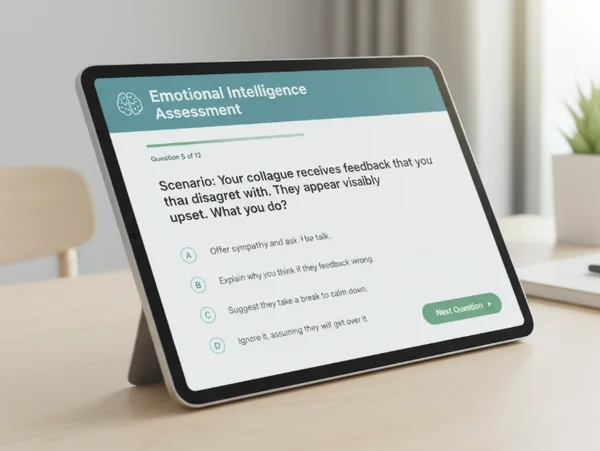
How Our EQ Test Measures Self-Awareness
Our platform uses a scientifically-inspired framework to evaluate your emotional intelligence. The test consists of 20 carefully designed questions that put you in real-world scenarios. It doesn't just ask "Are you self-aware?" Instead, it measures how you react to stress, conflict, and social cues.
By analyzing your answers, the system identifies your "default" emotional settings. Are you more prone to "flight" or "fight"? Do you prioritize your own needs or the needs of others? Our free eq test provides a basic score to help you start your journey. For those who want more, our AI-driven deep reports offer a personalized roadmap for growth.
Interpreting Your Self-Awareness Results
Receiving your score is just the beginning. The real value lies in the interpretation. A "low" score in self-awareness is not a failure. It is an opportunity. It means you have a significant chance to improve your life quality by simply paying more attention to your internal state.
Our reports break down your results into actionable categories. We show you exactly where your blind spots are and provide specific exercises to target them. Whether you are a student, a young professional, or a team leader, these insights help you build a more authentic and successful life. You can use the tool to track your progress over time as you practice the exercises mentioned in this guide.
Your Path to Greater Self-Awareness
Developing self-awareness is one of the most rewarding investments you can make. It is the foundation that supports better leadership, healthier relationships, and a more peaceful mind. Remember that self-awareness is not about being perfect. It is about being honest with yourself and willing to grow.
Make self-awareness part of your daily routine through simple practices like emotional check-ins and asking constructive questions. These small changes can dramatically shift how you experience your emotions. You don't have to do it alone. Data-driven insights can guide your way and keep you on track.
Are you ready to discover your true self? Take the first essential step toward higher emotional intelligence today. Start your free assessment now and begin your journey toward a more self-aware and empowered future.
Frequently Asked Questions About Self-Awareness
What is self-awareness in emotional intelligence?
Self-awareness is the ability to recognize your own emotions, thoughts, and values. In the context of emotional intelligence, it means understanding how these internal factors influence your behavior and your impact on others. It is the "first step" in the EQ model because you cannot manage emotions that you haven't identified yet.
How can I improve my self-awareness quickly?
The fastest way to improve is to practice "affect labeling." This means stopping several times a day to name exactly what you are feeling. Additionally, using a validated assessment can provide immediate insights into your blind spots that might take years to discover on your own.
Is self-awareness the most important component of emotional intelligence?
Many psychologists, including Daniel Goleman, consider it the foundation. Without self-awareness, you cannot effectively practice self-regulation or empathy. It is like trying to drive a car without a dashboard; you won't know if you are running out of gas or overheating until it is too late.
How accurate are self-awareness assessments?
Assessments are highly effective as a "mirror" for self-reflection. While they are not clinical diagnostic tools, they provide a structured way to look at your behaviors. When combined with AI analysis, they offer personalized data that is much more accurate than simple "yes/no" quizzes.
What's the difference between self-awareness and self-consciousness?
Self-awareness is an objective and healthy understanding of yourself that leads to growth. Self-consciousness is often rooted in anxiety and a fear of how others are judging you. Self-awareness empowers you, while self-consciousness often limits you.