Test Your Emotional Intelligence: The 5 Key Components
Have you ever wondered why some people navigate life’s challenges with grace while others struggle? The answer often lies not in their IQ, but in their EQ, or Emotional Intelligence. It’s the powerful, unseen skill set that governs how we manage our emotions, connect with others, and achieve our goals. But how well do you truly understand your own emotional landscape?
Emotional Intelligence (EQ) is a skill you can develop. Understanding its core components is the first step toward unlocking your full potential in your career, relationships, and personal well-being. This guide breaks down the five essential pillars of emotional intelligence. By the end, you’ll know exactly what they are and how you can begin to measure and strengthen them.
Ready to start your journey of self-discovery? A great place to begin is by understanding your current strengths. You can discover your EQ with a simple, insightful assessment designed to give you a clear starting point.

Understanding Emotional Intelligence: The Foundational Pillars
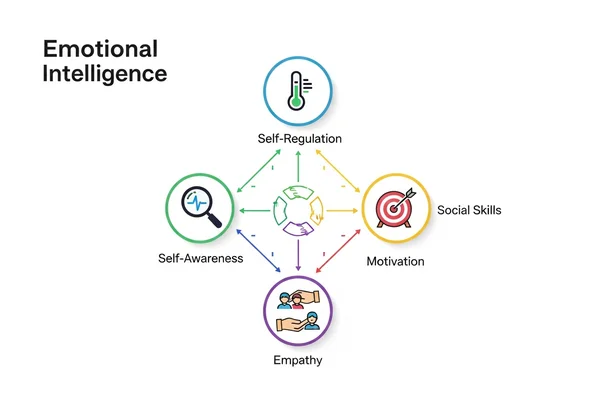
Before we dive into each component, it’s important to grasp the big picture. These five elements work together, creating a powerful synergy that defines a person's overall emotional intelligence. They are not isolated traits but interconnected skills that build on one another.
What is Emotional Intelligence in Psychology?
Psychologist Daniel Goleman popularized it. EQ goes beyond IQ. It covers recognizing your feelings, controlling them, understanding others' emotions, and influencing them wisely. It’s about being smart with emotions—both yours and those of the people around you. Think of it as the foundation for strong leadership, effective collaboration, and deep personal resilience.
Why These 5 Components Matter for Your Life and Career
Mastering these five components isn't just an academic exercise; it has a direct impact on your daily life. At work, high EQ sharpens decisions under pressure, builds teams, and boosts leadership. Personally, it deepens bonds, smooths family talks, and eases stress or fights. For anyone dedicated to self-improvement, understanding these pillars is the roadmap to becoming a more effective, empathetic, and fulfilled individual.
Component 1: Self-Awareness – Knowing Your Inner World
Self-awareness is the cornerstone of emotional intelligence. Without it, you cannot effectively manage your emotions or understand others. It is the ability to look inward with clarity and honesty.
Recognizing and Understanding Your Emotions
This is the fundamental skill of knowing what you are feeling and why. It’s the difference between saying "I feel bad" and "I feel disappointed because my project didn't get the recognition I hoped for." People with high self-awareness can accurately identify their emotions as they happen. They don’t let feelings control them because they understand their source.
Identifying Your Strengths, Weaknesses, and Values
Self-awareness goes beyond just emotions. It also involves having a clear picture of your personal strengths and weaknesses. What are you naturally good at? Where do you consistently struggle? Furthermore, it means understanding your core values—the principles that guide your decisions. When you know your values, you can make choices that align with your authentic self. This leads to greater confidence and satisfaction.
Component 2: Self-Regulation – Mastering Your Reactions
If self-awareness is about knowing your emotions, self-regulation is about what you do with that knowledge. It is the ability to manage and control your emotional responses, especially in challenging situations.
Managing Emotional Impulses and Stress Effectively
Ever snapped in a meeting? We all experience moments of frustration, anxiety, or anger. Self-regulation is the skill that prevents you from sending a heated email or lashing out. It involves pausing, taking a breath, and choosing a thoughtful response over an impulsive reaction. This ability is crucial for maintaining professionalism and building trust. It also helps in managing stress, preventing emotional burnout.
Adapting to Change and Embracing Accountability
A key part of self-regulation is flexibility. Life is unpredictable. Adapting to change without emotional turmoil is a sign of high EQ. This includes being open to new ideas and navigating uncertainty calmly. It also means taking responsibility for your actions and mistakes. Instead of blaming others, an emotionally intelligent person owns their role in a situation and focuses on finding a solution.
Component 3: Motivation – Driving Your Passion
Motivation, in the context of emotional intelligence, is about more than just ambition. It's the internal drive to achieve goals for personal fulfillment. This isn't about external rewards like money or status.
Setting and Achieving Personal and Professional Goals
Emotionally intelligent individuals are driven to improve and achieve. They set challenging goals for themselves and have the discipline to see them through. This inner drive comes from a deep-seated desire for growth and accomplishment. They understand that setbacks are part of the process and use them as learning opportunities, not reasons to give up.
Cultivating Resilience and a Positive Outlook
True motivation is fueled by optimism and resilience. People with this skill can find the silver lining even in difficult situations. They believe in their ability to shape their own destiny and don't get easily discouraged. This positive outlook helps them bounce back from failure. They persist through obstacles and inspire others to keep going.
Component 4: Empathy – Connecting with Others
Empathy is the ability to understand and share the feelings of another person. It's the bridge connecting your emotional world to others. This forms the basis of all meaningful relationships.
Understanding and Sharing Others' Feelings and Perspectives
At its core, empathy is about putting yourself in someone else's shoes. It involves listening not just to the words someone is saying but also to the emotions behind them. This requires paying attention to non-verbal cues like body language and tone of voice. An empathetic person senses what others feel. They respond in a way that makes people feel seen and understood.
Improving Your Perspective-Taking Skills for Deeper Connections
Empathy isn't just about feeling what others feel; it's also about understanding their perspective, even if you don't agree with it. This cognitive aspect of empathy allows you to appreciate different viewpoints and cultural backgrounds. Developing this skill is essential for effective communication, conflict resolution, and building diverse, inclusive teams. It’s the key to turning simple interactions into genuine connections.
Component 5: Social Skills – Building Effective Relationships
Social skills are the culmination of the other four components. These skills emerge when you combine the other four components. You use them to build strong relationships and navigate social situations effectively.
Communicating Clearly, Persuasively, and Respectfully
Strong social skills are rooted in excellent communication. Express ideas clearly and persuasively. Listen actively. Tackle tough talks with tact so everyone feels respected. Whether you are leading a team, negotiating a deal, or simply talking with a friend, clear communication is essential.
Inspiring, Influencing, and Resolving Conflicts Positively
People with advanced social skills are adept at building rapport and inspiring others. They can rally a team around a shared vision and influence others in a positive direction. They are also skilled at managing disagreements. They don't avoid conflict. Instead, they see it as a chance to strengthen relationships by finding common ground and working towards a solution that benefits everyone.
How to Test and Assess Your Emotional Intelligence Components
Reading about these components is the first step. The key to growth is understanding where you stand with each one. Self-reflection can be helpful, but a structured assessment provides objective insights that are harder to see on your own.

The Value of Online EQ Assessments like Ours
Online emotional intelligence tests offer a quick and accessible way to get a baseline measurement of your EQ. They provide a snapshot of your strengths and identify areas for development. A good assessment gives you meaningful feedback you can act on. Our free EQ test, for example, is based on established psychological concepts.
Interpreting Your EQ Scores for Component-Specific Insights
The most valuable part of an EQ assessment is the breakdown of your scores across the different components. Your results might show high empathy but a lower score in self-regulation. This specific insight is incredibly powerful. It tells you exactly where to focus your self-improvement efforts. Instead of vaguely trying to "be better," you can work on specific strategies to manage your impulses or practice more active listening.
Strengthening Your EQ: Practical Strategies for Continuous Growth
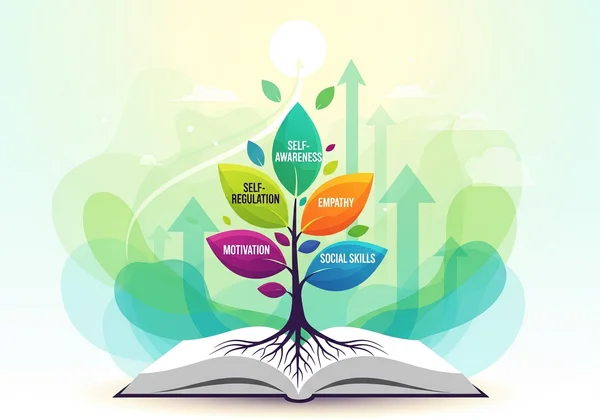
The best news about emotional intelligence is that it is not fixed. With conscious effort and practice, you can strengthen each of the five components. This will significantly improve your EQ over time.
Daily Practices to Enhance Each Emotional Component
- Self-Awareness: Start a daily journal. At the end of each day, write down three emotions you felt and what triggered them.
- Self-Regulation: Practice the "pause." When you feel a strong emotion rising, take a 10-second pause before you speak or act.
- Motivation: Break a large goal into smaller, manageable steps. Celebrate each small win to keep your momentum going.
- Empathy: During conversations, make it a point to listen without planning your response. Try to summarize the other person’s feelings to confirm your understanding.
- Social Skills: Offer genuine praise or recognition to a colleague or friend at least once a day.
Tracking Your Progress and Sustaining Your Emotional Development
Emotional development is a marathon, not a sprint. Consistency is key. Consider taking an emotional intelligence assessment periodically—perhaps every six months—to track your progress. Seeing your scores improve can be a powerful motivator. Continue learning through books, articles, and workshops to keep your skills sharp and your growth journey moving forward.
Ready to Boost Your EQ? Take the Test and See Your Strengths
Mastering yourself and your career starts with understanding these five pillars of emotional intelligence: Self-Awareness, Self-Regulation, Motivation, Empathy, and Social Skills. These aren't just buzzwords; they are the fundamental skills that empower you to build a more successful and fulfilling life.
You now have the knowledge to identify these pillars in yourself and others. But knowledge is only powerful when put into action. The next step is to discover your unique emotional profile.
Find out where you excel and where you have opportunities to grow. Start your test today to receive a free, instant analysis of your emotional intelligence. Your journey to a higher EQ begins now.
Frequently Asked Questions About Emotional Intelligence Components & Testing
What is a good score on an emotional intelligence test?
No magic number makes a 'good' score—what matters is spotting your strong suits and growth spots, like high empathy but room for self-regulation. The focus should be less on a single number and more on understanding the balance across the five components. A valuable result provides a personalized roadmap for growth.
Is there a free emotional intelligence test to assess these components?
Yes, absolutely. Many online resources are available, but it's important to choose one that is credible and provides clear insights. Our platform offers a comprehensive emotional intelligence test free of charge. It is designed to give you a solid baseline understanding of your EQ across the key components discussed in this article.
How long does an emotional intelligence test take?
Most online EQ tests are designed to be quick and convenient. Our assessment, for example, consists of 20 questions and typically takes only 5-10 minutes to complete. The goal is to provide you with valuable insights without requiring a significant time commitment.
Can emotional intelligence be improved over time?
Definitely. Unlike IQ, which is relatively stable, emotional intelligence is a flexible set of skills that can be learned, practiced, and improved throughout your life. With consistent effort in areas like self-reflection, active listening, and mindful emotional management, anyone can significantly enhance their EQ.