Track Your Emotional Intelligence Growth: A Complete Guide to EQ Progress Testing
Have you ever wondered if your emotional intelligence is truly improving—or if you’re stuck in the same patterns year after year? Unlike IQ, which remains relatively stable, emotional intelligence (EQ) can grow with consistent effort—but only if you track it systematically. In this guide, you’ll discover how to use repeated emotional intelligence assessments to measure tangible growth in self-awareness, empathy, and relationship management skills. Whether you’re an aspiring leader or focused on personal development, tracking your EQ progress can unlock your full potential. Start your emotional intelligence journey today with our free baseline assessment.

Why Long-Term EQ Tracking Transforms Growth
Emotional intelligence isn’t a fixed trait—it’s a skill set you can develop. Unlike one-time personality tests, EQ assessments measure abilities you can intentionally strengthen, like recognizing emotions in others or managing stress constructively.
The Neuroscience Behind Emotional Growth
Studies by researchers like Richard Davidson show that consistent emotional regulation practice physically rewires the brain’s prefrontal cortex, a concept known as neuroplasticity. Just as athletes track workouts to verify their training methods, EQ progress tracking lets you:
-
Identify which exercises actually improve your emotional agility.
-
Notice subtle improvements in daily interactions that you might otherwise miss.
-
Stay motivated by seeing quantifiable milestones on your journey.

5 Undeniable Benefits of Documenting Your EQ Journey
- Pattern Recognition: Spot recurring emotional triggers and behavioral patterns across different assessment periods.
- Goal Alignment: Focus your development efforts on the specific EQ competencies that matter most for your personal and professional goals.
- Confidence Building: Concrete, data-driven proof of your growth fuels the motivation needed to tackle bigger challenges.
- Relapse Prevention: Early detection of skill regression allows you to intervene before old habits become re-entrenched.
- External Validation: Share tangible progress reports with a mentor, coach, therapist, or manager to demonstrate your commitment to growth.
Building Your EQ Progress Tracking System
Effective EQ measurement requires strategy, not guesswork. To get the most out of your efforts, combine standardized testing with real-world observation.
Ideal Retesting Intervals for Reliable Insights
To separate real growth from temporary mood fluctuations, follow a strategic testing schedule:
- Baseline Retesting: Take the test again 4-6 weeks after your initial emotional intelligence test to see the impact of your first deliberate efforts.
- Maintenance Checks: Every 3 months is ideal for long-term monitoring and ensures you stay on track.
- Intensive Growth Phases: If you are actively working with a coach or taking a course, test monthly to get more frequent feedback.
Standardized Tracking Methods
-
Digital Journals: At the end of each week, note one situation where you successfully managed your emotions and one where you struggled. Connect this back to your EQ score.
-
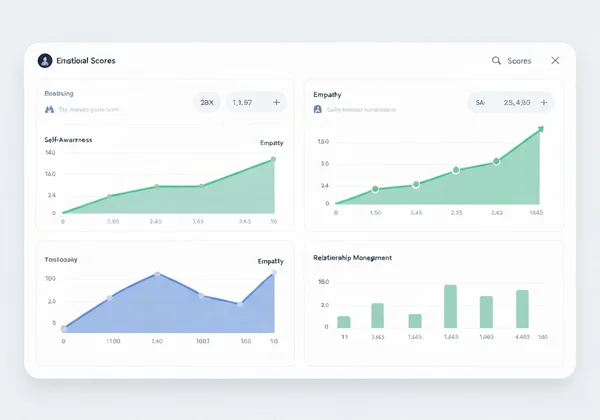
Score Dashboards: Compare your EQ test reports side-by-side in a spreadsheet to visualize trends in specific areas like Self-Awareness or Social Skills.
-
Behavioral Checklists: After an assessment, create a simple checklist of 2-3 behaviors you want to practice, such as "Listen without interrupting" or "Pause before reacting to criticism."
Interpreting Your Emotional Intelligence Score Changes
Not all score fluctuations mean meaningful change. Here’s how to distinguish random noise from genuine growth.
Understanding Natural Score Variations
- Context Matters: A significant life event, like a new job or a personal loss, can temporarily impact your score. Don’t panic over a single dip; look for the trend over multiple tests.
- Sub-Score Signals: Your overall score might only move a few points, but a consistent upward trend in a specific sub-domain like conflict management or empathy is a strong signal of progress.
Prioritizing Development Areas
Use your EQ assessment results to create a targeted plan:
- Low Self-Regulation: Your score reflects a struggle with managing impulsive feelings. Practice daily mindfulness or breathing exercises for 5 minutes.
- Low Empathy: You may have difficulty seeing things from others' perspectives. Try a perspective-taking exercise: before your next meeting, write down what you think each attendee wants to achieve.
- High Relationship Skills: Your score shows this is a natural strength. Leverage it by volunteering to mentor a junior colleague or lead a team project.
Turning EQ Trends Into Tangible Growth
Data means nothing without action. Transform your tracking insights into real-world results that others will notice.
Personalized Improvement Plans
- Use free EQ retesting to validate whether your improvement tactics are working.
- If your assertiveness scores stagnate after 3 months of practicing direct communication, consider a more structured approach like a role-playing workshop.
- Celebrate a consistent 10% gain in your emotional awareness score with a reward that reinforces your commitment to self-care.
Sharing Results Professionally
-
Highlight specific EQ progress (e.g., "improved conflict resolution skills by 15% over six months") in your performance reviews.
-
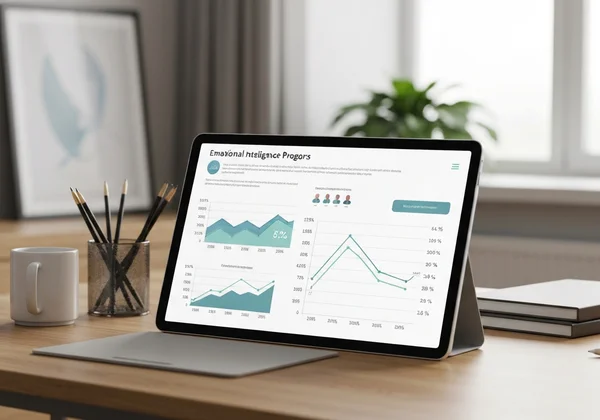
"After tracking my EQ for 18 months, I used the clear, data-driven graphs to successfully advocate for a company-wide emotional intelligence program," shares a marketing director.
Your Next Step in Evidence-Based Emotional Growth
Measuring your EQ growth isn’t about chasing a perfect score—it’s about understanding your direction. By establishing your baseline with our scientifically validated emotional intelligence test and retesting strategically, you transform abstract self-improvement goals into a clear, measurable project. You’ll gain:
- 🎯 Clear development priorities based on real data.
- 📈 Visual proof of your progress to keep you motivated.
- 💡 Actionable insights linking your behaviors to your scores.
Ready to start your measurable EQ journey? Take your first assessment now—it’s free, takes under 15 minutes, and provides immediate insights you can use today. Save your results to begin tracking your growth!
Mastering EQ Progress Tracking
-
How often can I retake the emotional intelligence test?
Our system is designed for quarterly retesting to ensure reliable, long-term tracking. Access your free retest anytime to compare scores against your previous results. -
What EQ score change counts as meaningful improvement?
A consistent increase of 10% or more in a specific competency across two or three retests typically indicates real growth. Focus on the trend over time, not on a single score. -
Can EQ actually improve if I work at it?
Absolutely. Research from experts like Dr. Travis Bradberry shows that most people can increase their EQ scores by 9-15% with 12-18 months of targeted practice and consistent effort. -
Is this an official psychological diagnosis?
No. Our emotional intelligence assessment is an educational tool designed for self-awareness and personal development. It is not a clinical assessment and should not be used to diagnose any psychological conditions. For a clinical evaluation, please consult a qualified healthcare professional. -
How does your progress tracking differ from expensive EQ certifications?
While we don’t replace in-depth clinical assessments, our AI-powered EQ tests offer an accessible, affordable, and research-aligned way to track your personal development journey. -
Is this test suitable for team progress tracking?
Yes. Many HR leaders and managers use our platform for group retesting to measure the ROI of training programs and identify collective team strengths and weaknesses. Explore team solutions →